
Nine million applications, every attorney, law firm, examiner and applicant in the record — ranked, cross-referenced and searchable in plain English. Answer in minutes what used to take a paralegal a week.
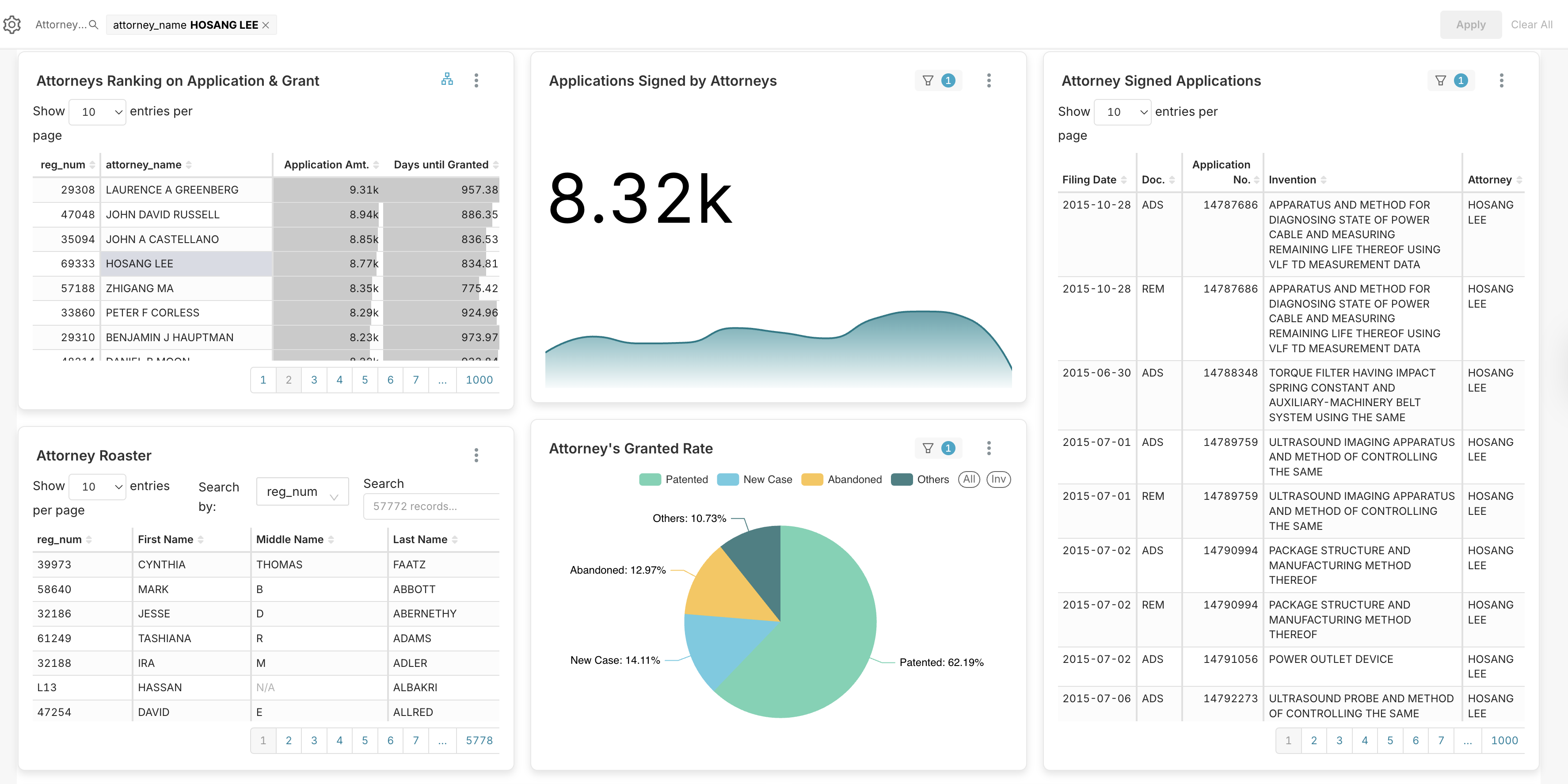
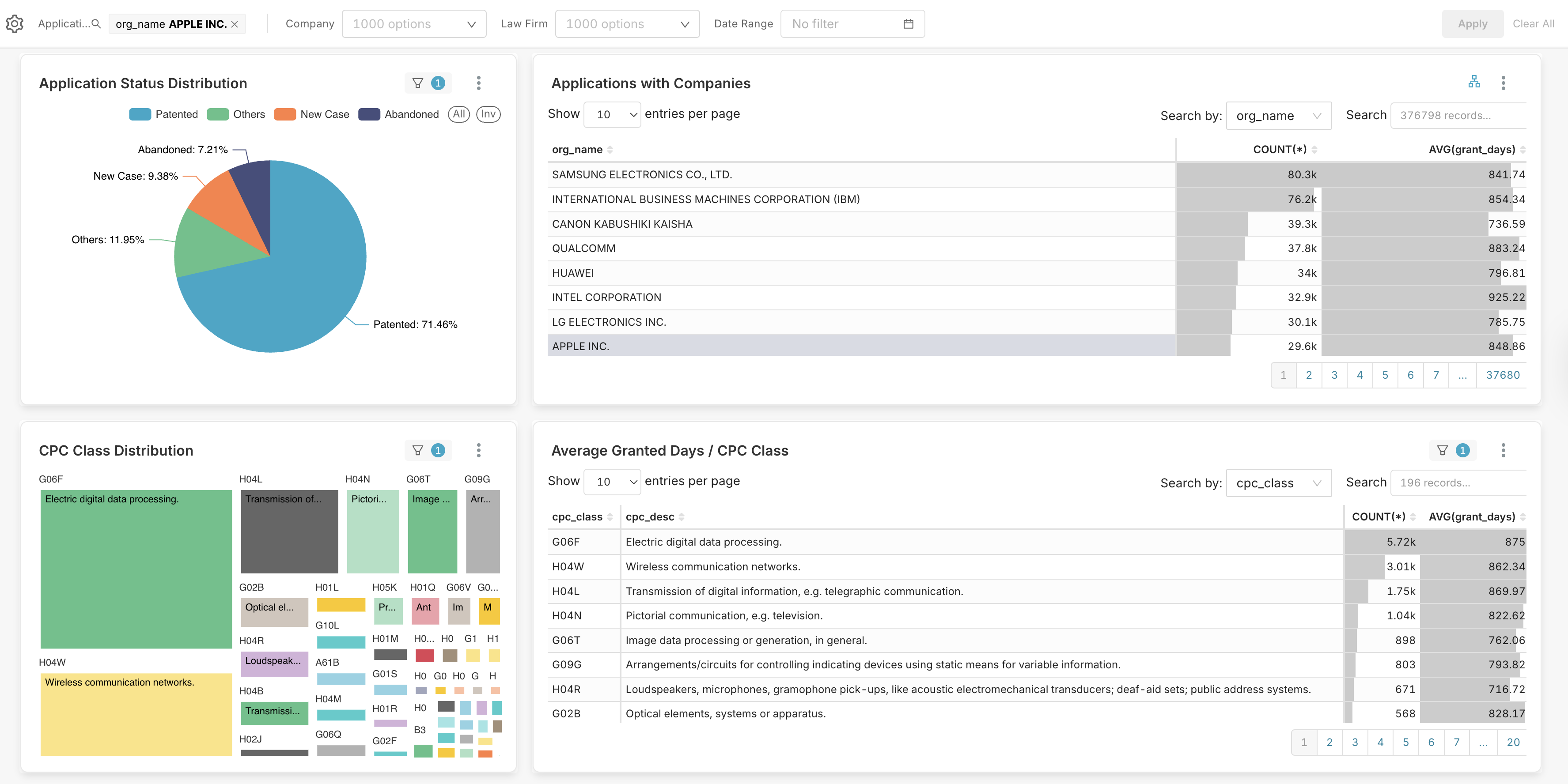
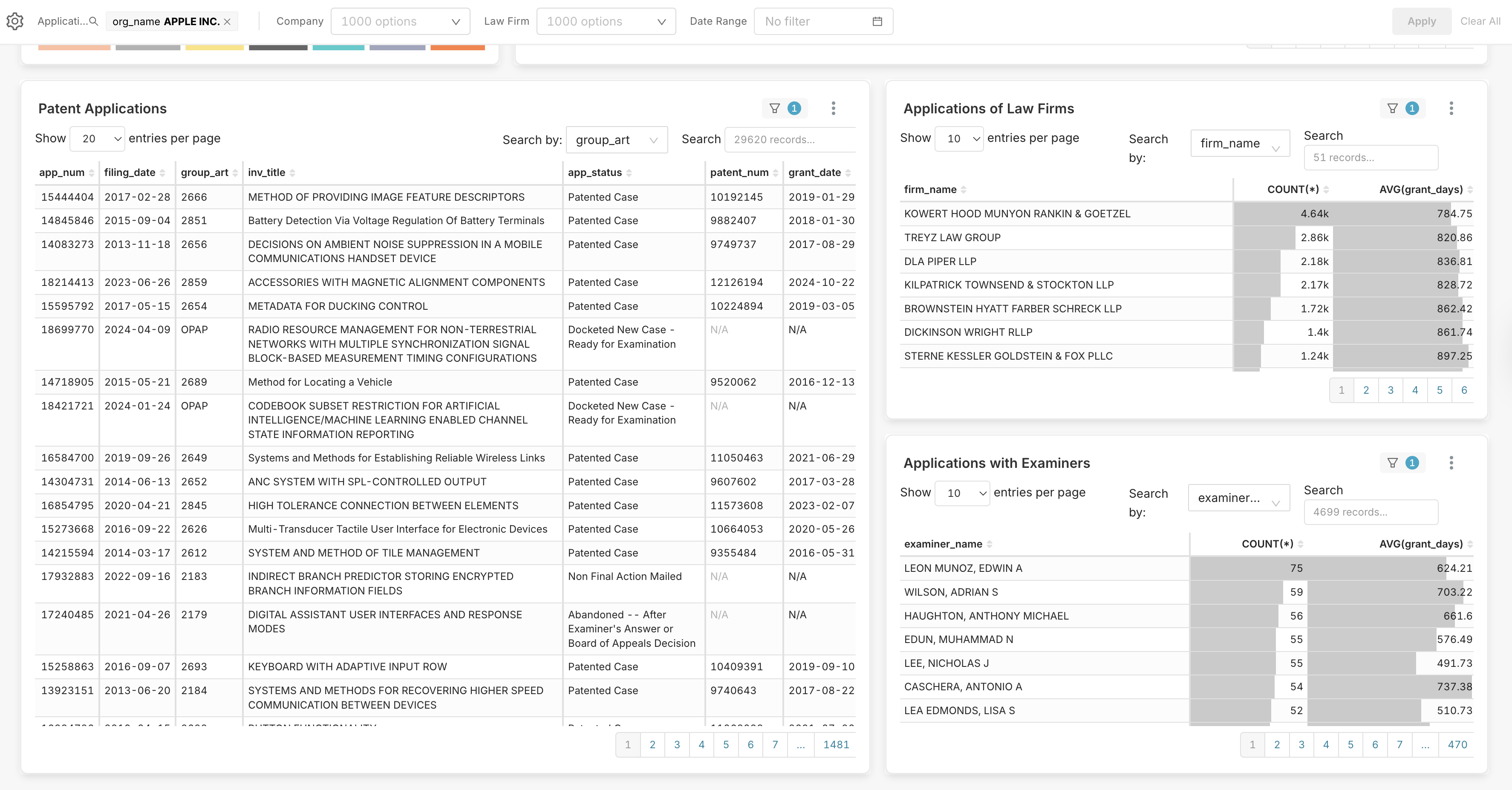
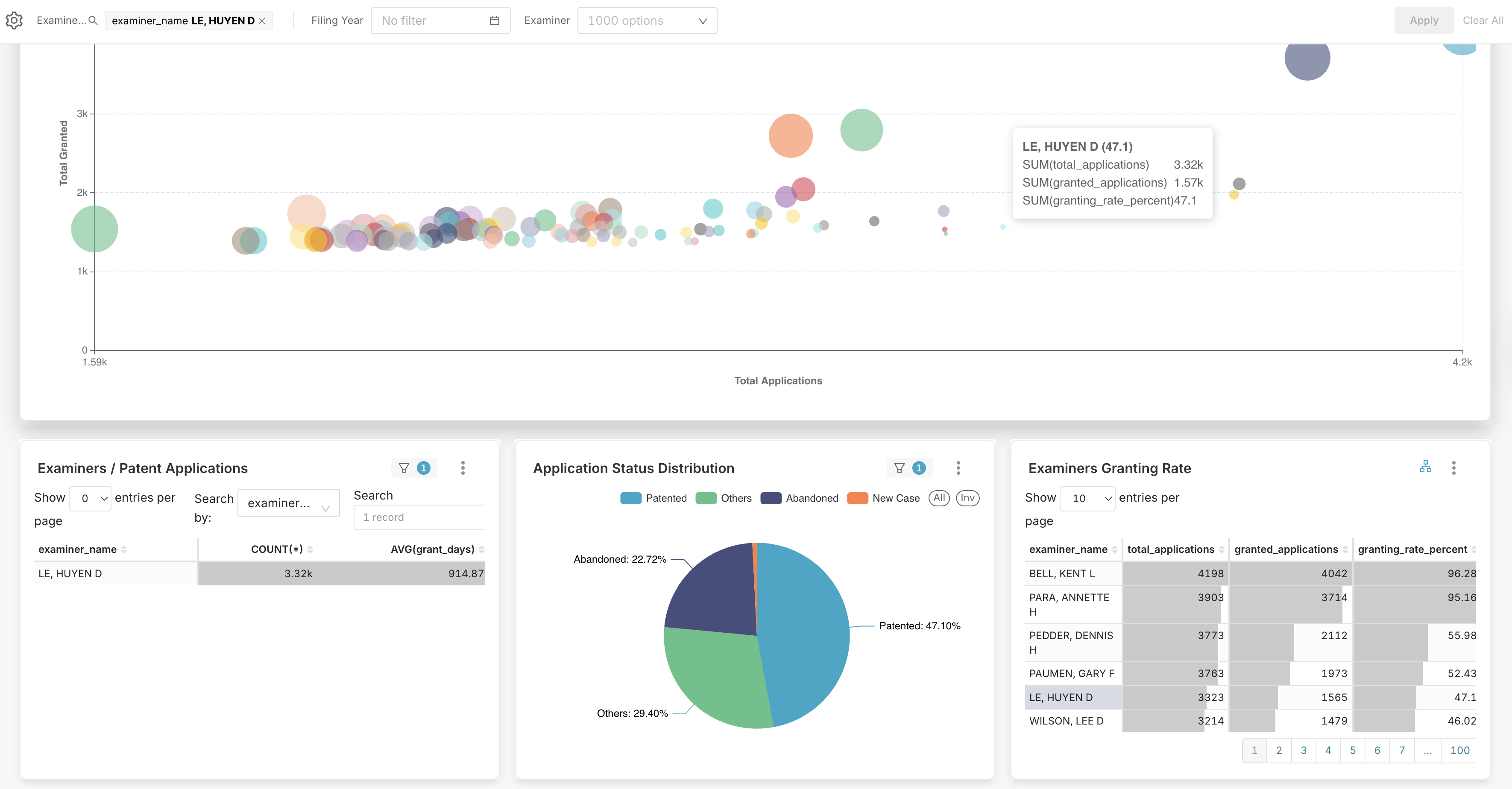
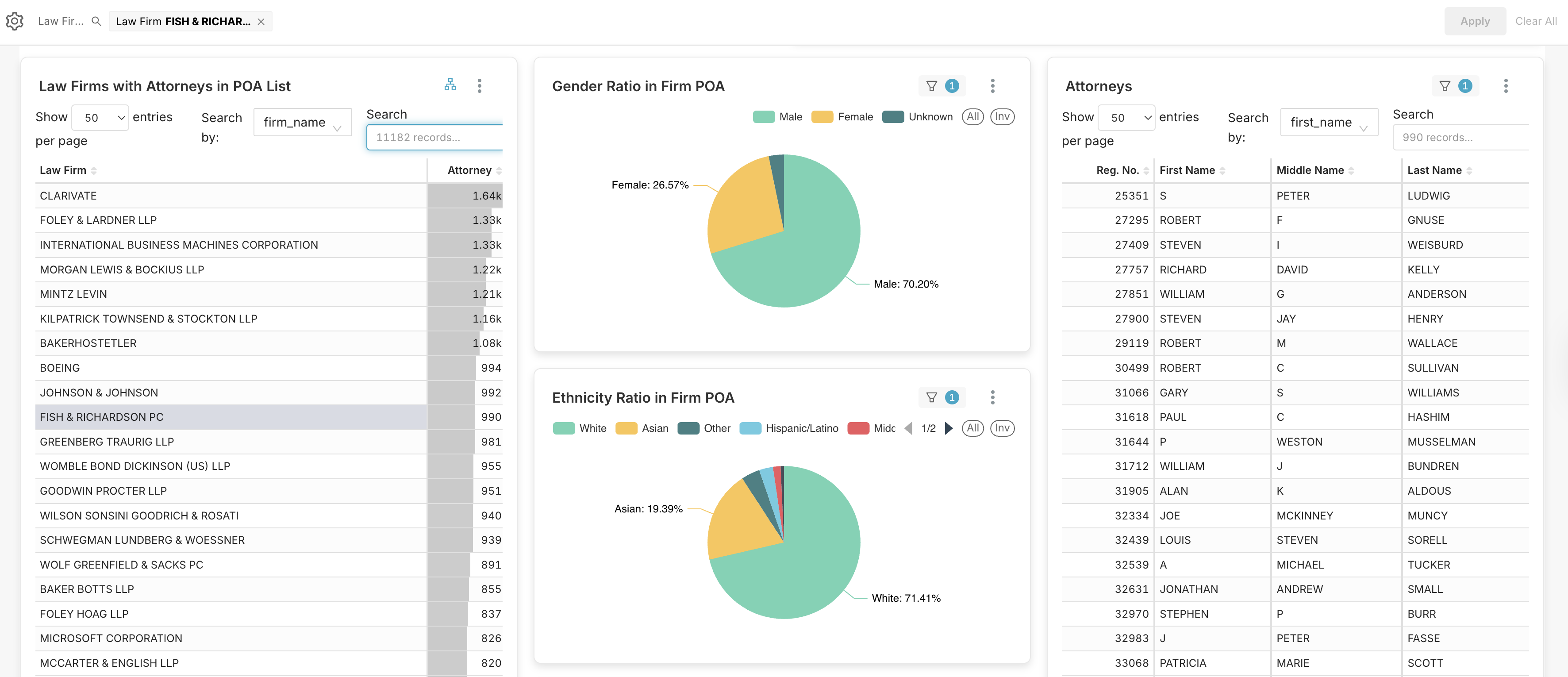
Grouped the way the work is grouped. Every one of these resolves into an interactive chart you can click through, filter and cite — not a static report.
Every question resolves into the same three ranked universes, each capped at the top 1,024 and recomputed as new USPTO data lands.
Ranked on signed volume, grant rate and pendency — built from 21,784,893 signed prosecution documents rather than the power-of-attorney record alone.
| Firm | Apps |
|---|---|
| Oblon, McClelland, Maier & Neustadt | 62,802 |
| Sughrue Mion | 60,631 |
| Birch Stewart Kolasch & Birch | 52,831 |
| Oliff PLC | 46,914 |
| Knobbe, Martens, Olson & Bear | 40,892 |
| Applicant | Apps |
|---|---|
| Samsung Electronics | 46,034 |
| Qualcomm | 21,663 |
| Huawei Technologies | 20,135 |
| Canon | 18,151 |
| Apple | 17,807 |
Firm and applicant counts cover filings from 2020 onward
Describe what you want the way you would to a colleague. The query engine writes the SQL, runs it against the full corpus and hands back a table — no query language, no data team, no waiting.
| Applicant | Applications |
|---|---|
| Samsung Electronics | 46,034 |
| Qualcomm | 21,663 |
| Huawei Technologies | 20,135 |
| Canon | 18,151 |
| Apple | 17,807 |
Three things that separate a working instrument from a static report.
Click any bar, slice or row to drill straight through to the applications behind it. Every visualisation is a gateway to the underlying record, not a dead end.
Filter by applicant, firm, examiner, art unit, CPC subclass, entity status or date range — in any combination. Results recompute as you go.
Built directly on USPTO bulk data and the prosecution documents themselves, refreshed as new records publish. Nothing is invented; everything traces back.
Firms that opt in can run aggregate composition reports across their own signing practitioners, for client audits and Mansfield-style reporting. Firm-level aggregates only — never published attributes about named individuals. Classifications are model-generated and are suitable for statistical work, not for judgements about any one person.
Create an account and the whole corpus opens up — rankings, dashboards and the query engine. It takes a minute, and it is free.
All data presented on this platform are collected from the United States Patent and Trademark Office (USPTO). We do not add any new data in addition to the USPTO's original data.
Please note that some recent data collection may fall behind the USPTO's recent updates. For purposes of accuracy and specific detailed information, always refer to the USPTO's original data sources.
Data Analysis and AI-Generated Labels: We analyze existing data and identify connections within the dataset. Additionally, we enhance certain records with descriptive labels such as gender or ethnicity classifications. These labels are generated using artificial intelligence and are not 100% accurate. Please use these AI-generated labels with caution and consider them most reliable for statistical analysis rather than for determining specific individual characteristics.